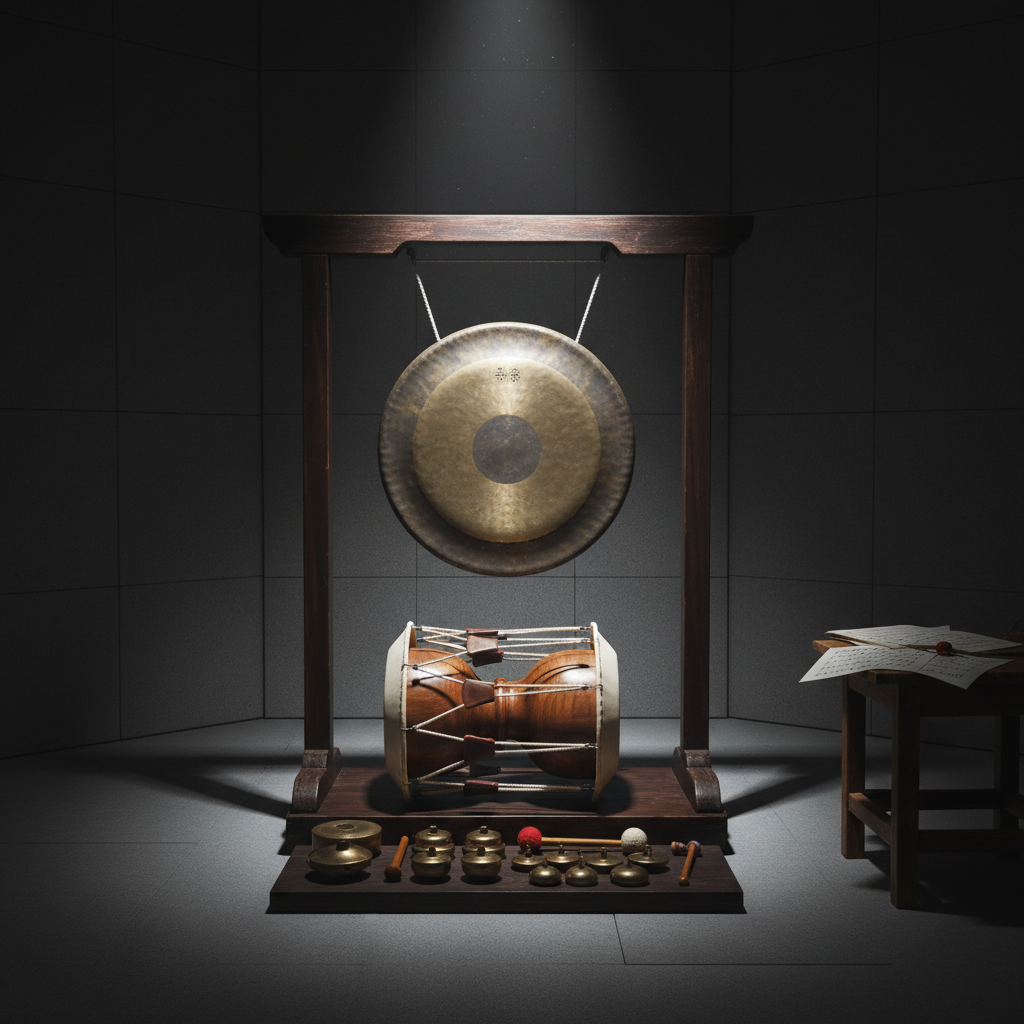
An antique brass gong with a slightly weathered, hand-hammered surface hangs from a dark wooden frame, its center bearing subtle traces of repeated strikes. Around its base lie traditional Korean percussion instruments: a janggu drum with taut leather heads and silk cords, and small bronze chimes neatly arranged on a low platform. The setting is a dim, acoustically treated studio with charcoal-gray walls and scattered sheet music on a side table. A single, soft spotlight from above grazes the metallic surfaces, creating luminous halos and deep, dramatic shadows. Photographic realism, framed in a centered, slightly low-angle composition, conveying reverence, history, and the weight of cultural memory.

Works Detail

Context, reflections, and performance paths behind Arnold Han’s concert and screen pieces.
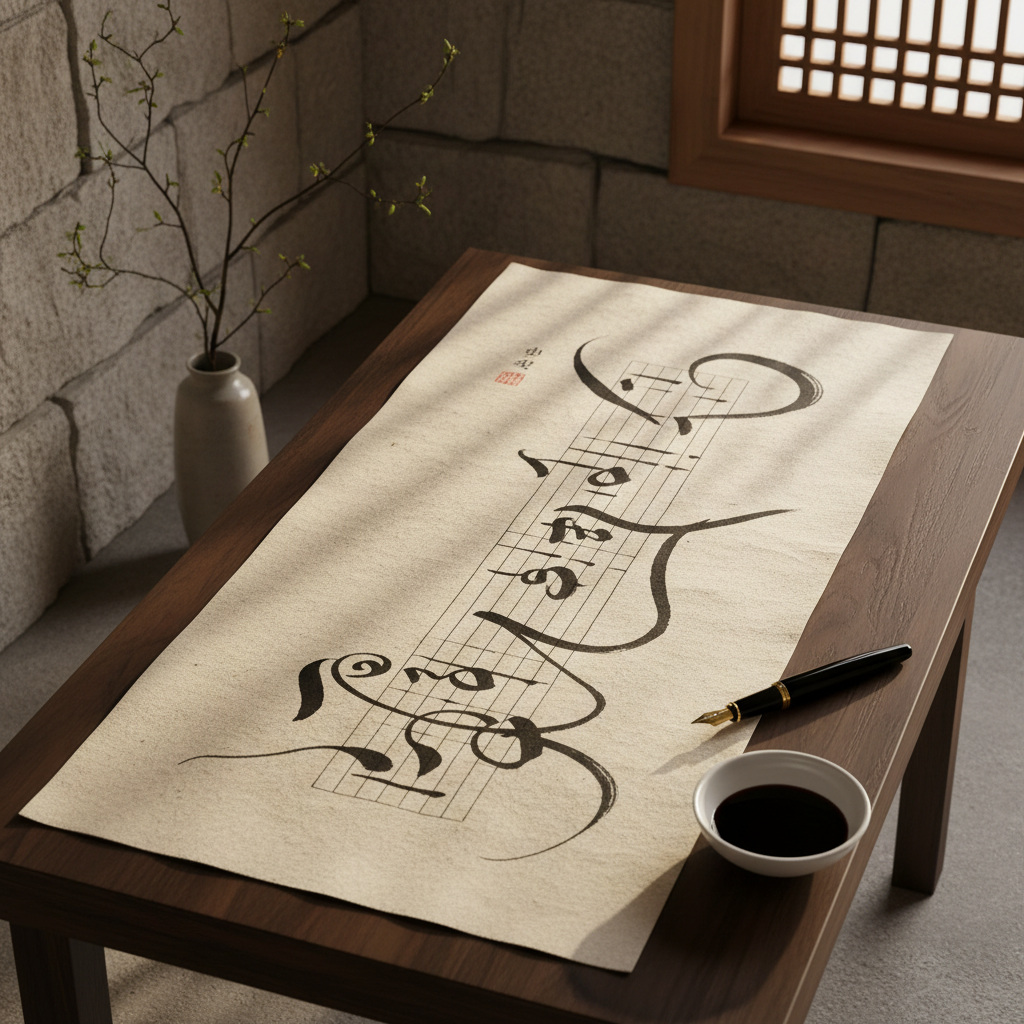
A traditional Korean hanji paper scroll unfurled across a low, dark-stained wooden table, its surface bearing flowing, abstract ink lines that resemble both calligraphy and musical notation. Beside it lies a fountain pen with a lacquered black body and gold nib, resting on a small porcelain ink dish. The surrounding space is sparse: a textured stone wall, a single branch in a slender vase, and a distant glimpse of a wooden lattice window. Late afternoon light filters through, creating soft, angled beams that highlight the fibrous texture of the hanji and subtle shadows along the ink strokes. Photographic realism, shot from directly above with balanced composition, evoking introspection and the fusion of tradition and contemporary expression.
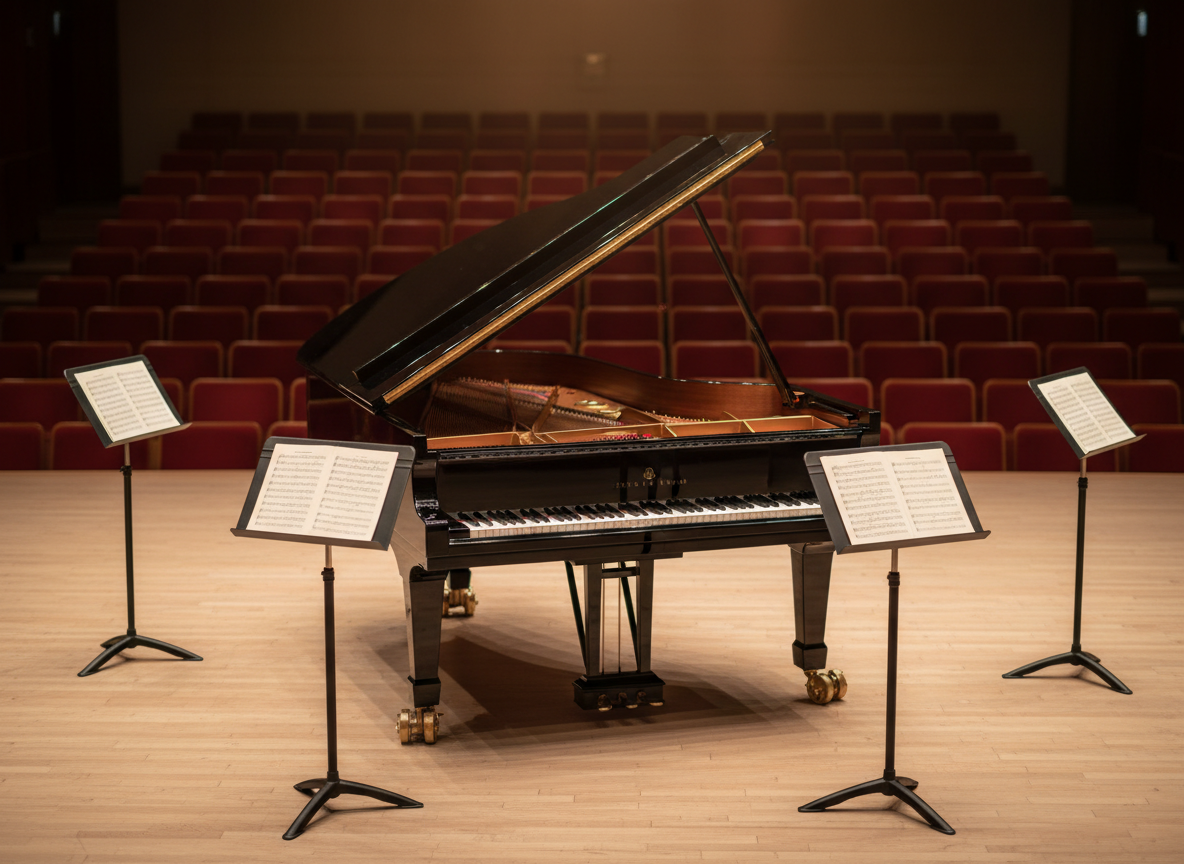
A meticulously tuned black grand piano with its lid fully open, revealing gleaming strings and hammers, sits in the center of a minimalist concert hall stage. The wood has a deep, mirror-like polish that softly reflects the warm amber stage lights above. Around it, empty music stands and neatly arranged scores hint at an upcoming performance. Soft, directional spotlights create delicate highlights along the piano’s curved edge and cast long, elegant shadows across the matte wooden floor. Photographic realism, shot from a slightly elevated, three-quarter angle with a shallow depth of field, emphasizing the instrument while the rows of seats fade into a gentle blur, creating a sophisticated, contemplative atmosphere.
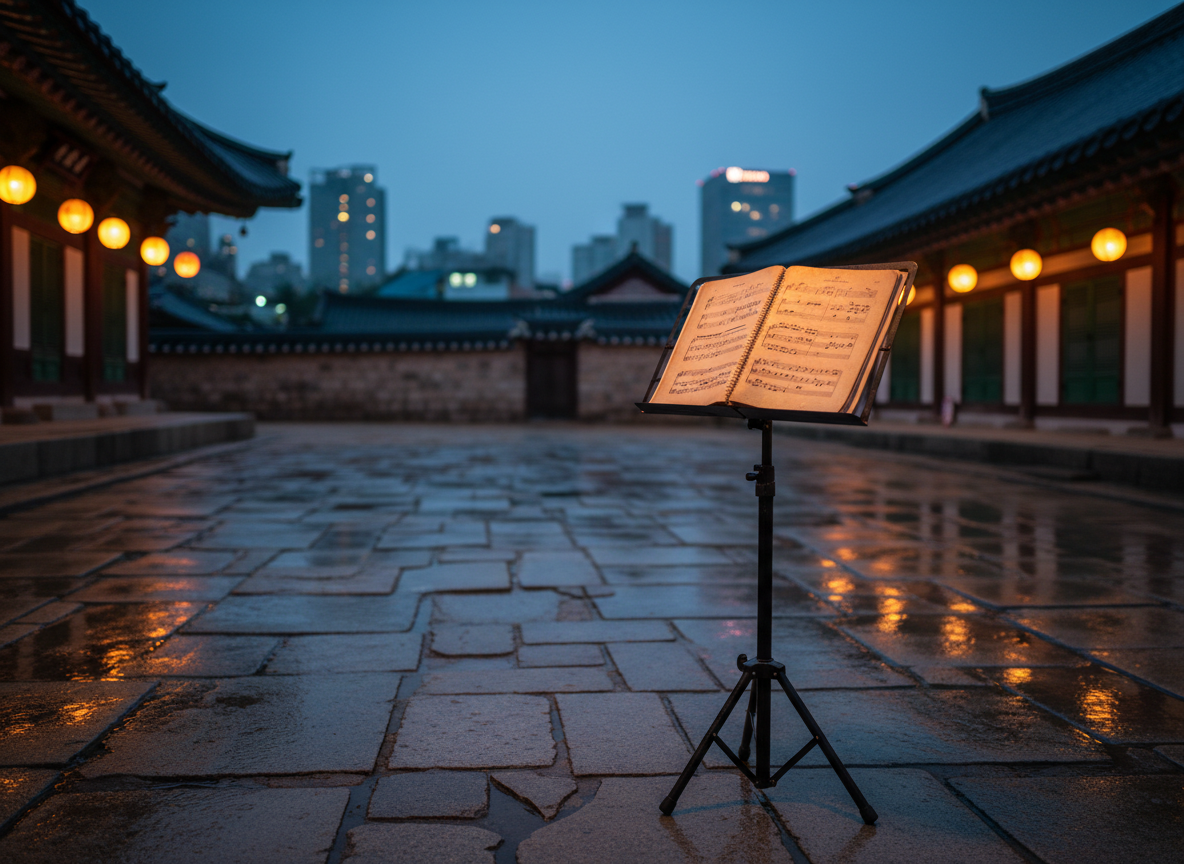
A weathered stone courtyard at dusk, its irregular flagstones slick from a recent rain, reflecting the faint glow of paper lanterns hanging from unseen eaves. At the center, a single black music stand holds a bound score whose pages flutter slightly as if caught by a breeze. The background reveals the blurred outlines of traditional Korean rooftops and a hint of modern city lights beyond the wall, symbolizing cultural convergence. Cool blue twilight mixes with the warm lantern light, creating a subtle, melancholic contrast. Photographic realism, composed using the rule of thirds from a low, slightly off-center angle, emphasizing solitude, memory, and the essence of “Han” in a contemporary context.
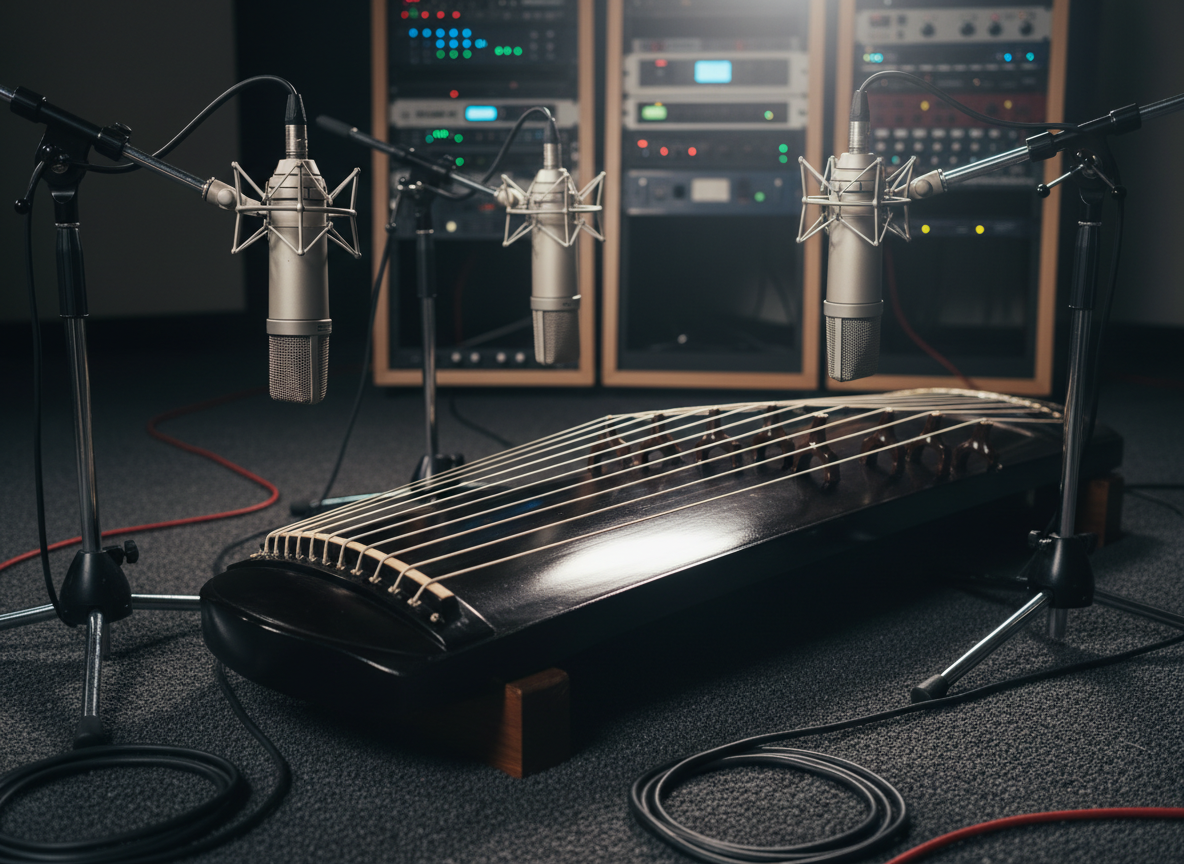
A carefully arranged cluster of recording microphones—sleek, matte-silver condensers with intricate grilles—surrounds a glossy black gu-geomungo resting on a low platform. The instrument’s strings stretch taut over dark wood, their subtle metallic sheen catching the studio lights. Around them, coiled cables run neatly across a sound-absorbing floor, with out-of-focus racks of audio gear glowing faintly in the background. The scene is lit by soft, directional overhead lighting and a gentle rim light from behind, producing a refined halo along the instrument’s silhouette. Photographic realism, captured from a low, three-quarter angle with medium depth of field, creating a mood of precise craft and quiet technical mastery.

Selected Works and Korean Han

Explore program notes that trace how Korean Han, memory, and migration shape each score, connecting traditional timbres and rhythmic inflection with a contemporary classical language heard on stages across New York and abroad.

Journal

Brief dispatches on premieres, collaborations, and evolving Korean Han interpretations.